

ADHD & the Organized Home:
Creating Systems That Work With Your Brain
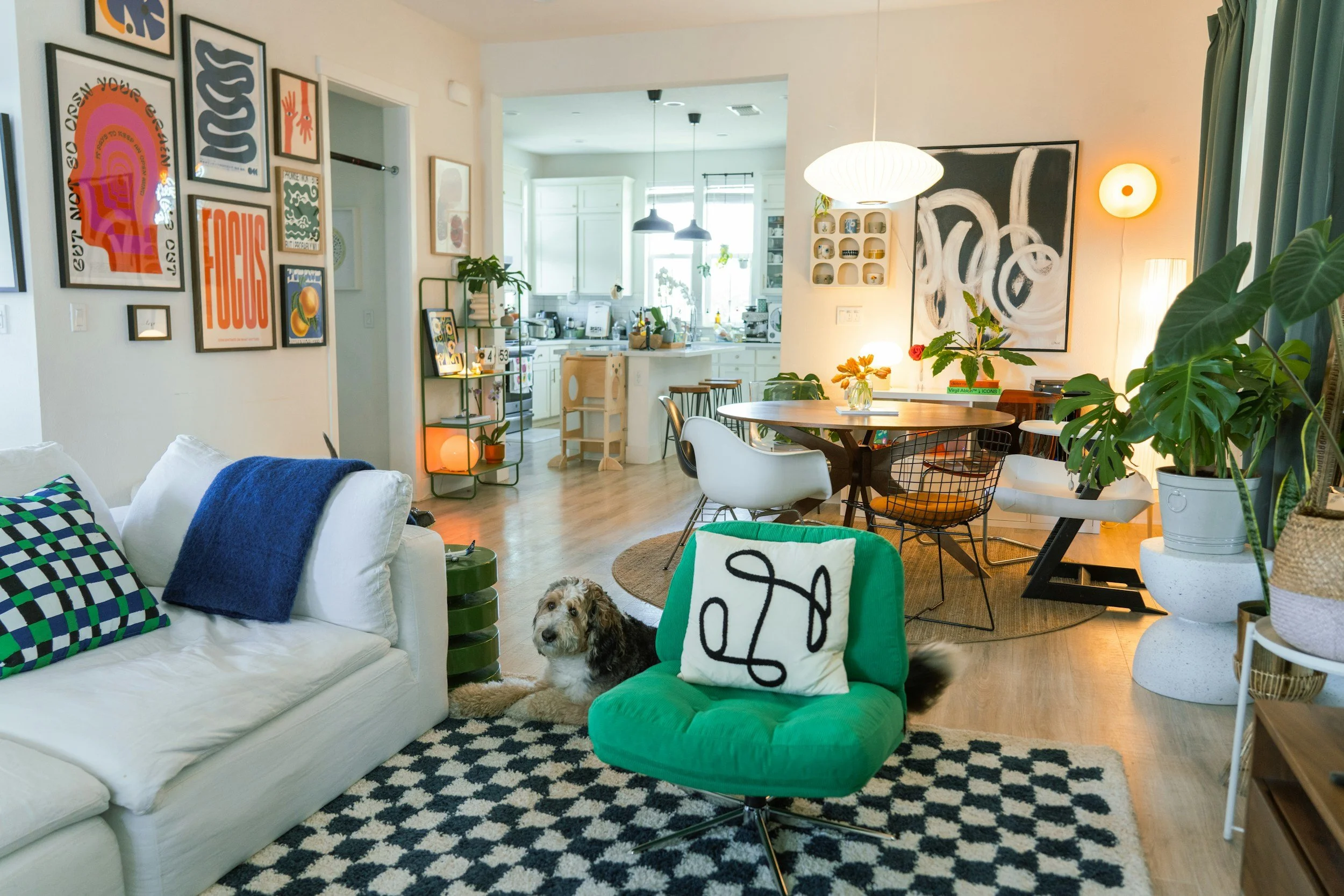
Many of the women I work with are neurodivergent, meaning their brains process information, attention, sensory input, emotions, and everyday demands differently from what is considered “typical.” ADHD is one form of neurodivergence, and for many women, the challenges around home organization are closely connected to the way their brains function.
If you’re a woman with ADHD, you may have spent many, many years wondering why keeping your home organized seems so much harder for you than it appears to be for everyone else.
I mean, you know how to clean. You know where things should go. You have lots of stacked-up bins in the garage; for sure, you’ve read the organizing books, watched the videos, and created the perfect plan. You’ve even done the decluttering and labeling! And yet somehow, the clutter comes back.
And it’s bringing your nemesis: guilt.
It’s likely you have been told you’re lazy, messy, scattered, careless, or that you simply need to “try harder.” Over time, those messages can become part of the way you see yourself. You may find yourself feeling like a failure because you are killing it in all of the other areas of your life, such as managing your career, your family, and a hundred other responsibilities, but somehow you can't keep the house under control.
As a professional home organizer, I want you to know something important: your struggles with your home do not mean you are lazy or incapable. Please read that again!
For many women with ADHD, the challenge isn't knowing what to do. It's getting from knowing to doing.
ADHD and the Challenges of Keeping an Organized Home
ADHD affects executive function—the mental skills that help us initiate tasks, prioritize, make decisions, remember information, switch between activities, and follow through.
And a home is basically one giant executive-function project.
There are hundreds of decisions hiding in every room: Where does this belong? Should I keep it? Do I need it? When should I deal with this? Where do I take all of these donations? What should I tackle first? What about the pile in the other room?
That constant decision-making can lead to decision fatigue. Eventually, your brain simply says, “Absolutely no more.”
That's when task paralysis can happen. You may stand in the middle of a cluttered room knowing exactly what needs to happen and still feel completely unable to start. To someone else, that can look like procrastination or laziness. But ADHD paralysis can involve being overwhelmed by too many choices, steps, or demands on executive function.
And when you've spent years being told that you're messy or that you just need to try harder, it's easy to turn that frustration inward.
Please, please listen to me. You aren't a failure! Your brain simply needs a different approach.
Why Traditional Organizing Systems Don't Always Work
One of the biggest mistakes I see when organizing for someone with ADHD is creating a system that looks beautiful but is difficult to maintain.
For example, an out-of-sight system is often a bad strategy for an ADHD brain.
If something is hidden behind a cabinet door, tucked into a drawer, or stored in an opaque container, it may effectively disappear from your awareness. And when you can't see something, remembering that it exists—and remembering to put it away—can become much harder.
That's why I often use visible, accessible, and intuitive storage solutions with my ADHD clients. The goal isn't to create a picture-perfect home that requires constant effort to maintain. The goal is to create a home where putting things away is easy enough that you'll actually do it.
If I’ve said it once, I’ve said it four thousand times: I treat each client individually, and therefore, their systems are never cookie-cutter. Your home needs to work for YOU specifically and the way you live. And, I want your systems to work on your busiest, most exhausted days—not just on the days when you're motivated.
Simple Systems Are Better Systems
When I work with women with ADHD, I focus on easy systems and easy maintenance.
That might mean creating a designated landing zone for the things that inevitably get dropped by the door. It might mean using open baskets instead of complicated filing systems. It might mean giving frequently used items a home that is incredibly easy to access.
You will never find me organizing someone’s home in a way that requires them to become a completely different person.
Instead, I look at how you already live and build systems around your habits, routines, energy, and ADHD brain.
Because getting organized is only part of the solution. The real goal is creating systems you can maintain. Does that sound impossible? I assure you it’s not!
A system that takes five steps to put something away probably won't survive one week in your life, but a system that takes one step just might.
The Power of Body Doubling
One of the tools I love incorporating into my work with ADHD clients is body doubling.
Body doubling means having another person present while you work on a task. They don't necessarily have to help you clean or organize. Sometimes simply having another person there provides the accountability, focus, and activation needed to get started. Body doubling can be done in person or virtually and may help with task initiation and follow-through.
This can be incredibly helpful for women with ADHD because sometimes the hardest part isn't doing the task—it's getting started.
When I'm there with you, we're not staring at the entire house and thinking, “How am I ever going to do all of this?”
We're breaking it down.
One drawer.
One counter.
One category.
One decision at a time.
And suddenly, the mountain doesn't feel quite so impossible.
There's also something powerful about having someone beside you who isn't judging or shaming you. And any professional organizer who does that should be immediately fired. We will simply work together toward a home that functions better for you.
I Understand ADHD Personally, Too
ADHD isn't just something I've read about professionally. I have a son with ADHD, so I've had a front-row seat to the ways an ADHD brain can approach tasks, organization, motivation, and everyday life differently. I’ve learned how to help him organize his life in a way that works just right for him.
That experience has made me especially compassionate toward my ADHD clients.
I understand that something can seem incredibly simple from the outside and still feel incredibly difficult to initiate. I understand that “just put it away” isn't always a useful solution. And I understand why shame and criticism don't create lasting change.
My job isn't to judge your home.
My job is to help you understand what isn't working, figure out why it isn't, and create systems that work with your brain rather than against it.
Let's Organize Your Home for Your ADHD Brain
You don't need a Pinterest-perfect house. No one does, because it’s not real life anyway.
You need a home that supports your actual situation.
If you're a woman with ADHD who is tired of feeling overwhelmed by clutter, tired of starting over, or tired of feeling like you're failing at something that seems easy for everyone else, I'd love to help.
Together, we'll create simple, visible, realistic systems that reduce decision fatigue, make everyday tasks easier, and give everything a home that makes sense to you.
No judgment. No lectures. No “you just need to be more disciplined.”
Just practical organizing strategies, compassionate support, and systems designed specifically for the way your ADHD brain works.
You don't need to become more organized to deserve an organized home. We can build an organized home that works for you.
Each Organizing Session Includes:
Complimentary in-home consultation
Hands-on decluttering + organizing
Project planning
Product sourcing
Custom labels
Taking away one carload per session of donations + specialty recycling
Coordination with additional service providers
Email + phone support up to two weeks after the final session
One-month check-in